You Won’t Believe What Urban Nadi, Fiji Is Hiding
When you think of Fiji, palm-fringed beaches and overwater bungalows probably come to mind—but Nadi? Most travelers fly in and out without ever seeing the town beyond the airport. I stayed longer and discovered something unexpected: a vibrant urban heartbeat full of local life, street art, bustling markets, and cultural fusion. This isn’t just a transit point—it’s a destination with soul. Let me show you the side of Nadi nobody talks about.
Beyond the Airport: Rethinking Nadi’s First Impression
Nadi is often reduced to a single role: Fiji’s international gateway. For millions of visitors each year, the town exists only as a blur between the airplane and the resort shuttle. Yet this perception overlooks a dynamic urban center with a rich cultural tapestry and a daily rhythm all its own. Nadi is not merely a stopover; it is a living, breathing town where life unfolds in full color, sound, and motion. The moment you step beyond the airport’s polished corridors, you enter a different world—one shaped by commerce, community, and coexistence.
Preconceived notions play a powerful role in how we experience destinations. Many travelers assume that true Fijian culture can only be found on remote islands or in coastal villages, far from the noise of traffic and the hum of storefront air conditioners. But urban spaces like Nadi offer a more complex, layered version of that culture. Here, tradition meets modernity in a constant, quiet negotiation. The streets are lined with sari shops and hardware stores, Hindu temples and Christian churches, roti stands and internet cafes. This is not a diluted version of Fijian life—it is an authentic expression of it.
Nadi’s significance goes beyond convenience. It is one of Fiji’s most ethnically diverse towns, where Indigenous Fijians, Indian-Fijians, and Pacific Islanders live and work side by side. This multicultural fabric is visible in the languages spoken, the foods eaten, and the festivals celebrated throughout the year. Diwali lights illuminate streets in October, while Christmas carols echo through markets in December. The town does not hide this diversity—it wears it proudly. To dismiss Nadi as “just a town” is to miss one of the most genuine reflections of contemporary Fiji.
The Pulse of the Town: Nadi Market as a Living Centerpiece
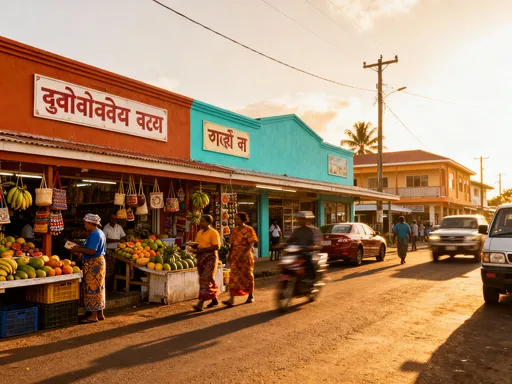
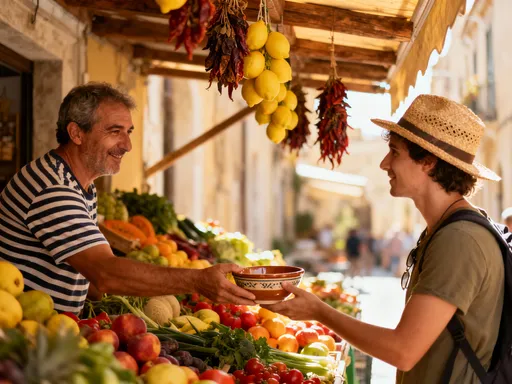
If Nadi has a heart, it beats strongest at the Nadi Municipal Market. Tucked between bustling roads and modest storefronts, this open-air marketplace is not designed for Instagram—it is built for life. From early morning until mid-afternoon, the market hums with energy, drawing locals from surrounding neighborhoods to buy, sell, and socialize. It is a place of transaction, yes, but also of connection, where news is exchanged as freely as produce.
Walking into the market is an immersion of the senses. The air is thick with the scent of ripe mangoes, jackfruit, and pineapples stacked in pyramids of gold and green. Bunches of dalo (taro) and cassava line wooden crates, while baskets of kumala (sweet potato) add bursts of orange and purple. At the seafood section, silvery fish glisten on crushed ice, their eyes still bright—fresh catches from nearby waters, brought in before sunrise. Vendors call out prices in Fijian, Hindi, and English, their voices rising above the rustle of banana leaves and the clink of scales.
What makes this market extraordinary is its authenticity. Unlike curated craft markets created for tourists, the Nadi Municipal Market serves the daily needs of the community. A grandmother haggles gently over the price of turmeric root. A young couple buys coconuts for a family lunch. A chef from a local restaurant selects prawns for dinner service. Tourists are welcome, but they are not the focus. This is not a performance—it is real life, unfolding in real time.
For visitors, navigating the market is both an adventure and a lesson in cultural etiquette. Prices are generally fair, but polite negotiation is expected. It’s wise to carry small bills and to smile often—respect goes a long way. While almost everything is worth a look, standout items include fresh kava root (used in traditional ceremonies), handwoven mats, and bundles of curry leaves. Avoid pre-packaged souvenirs or mass-produced trinkets; the true treasures here are the raw, the real, and the handmade.
Hidden Street Culture: Art, Architecture, and Unexpected Aesthetics
Beyond the market, Nadi reveals another layer of identity through its streetscapes. At first glance, the town may appear unremarkable—low-rise buildings, faded paint, and a tangle of power lines. But look closer, and a quiet creativity emerges. The architecture tells stories of migration, faith, and survival. Shopfronts are painted in bold blues, reds, and yellows, their signs written in a mix of English, Hindi, and Fijian. A sari shop shares a wall with a hardware store; a mosque stands across from a Hindu temple. These are not accidents of urban planning—they are testaments to a community that has learned to thrive in diversity.
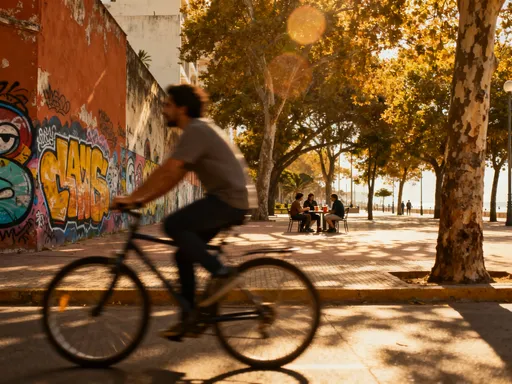
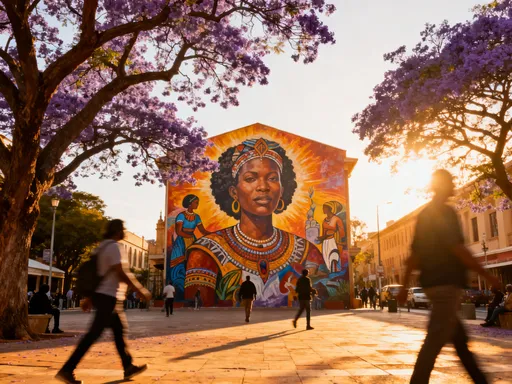
Street art, though not as prominent as in larger global cities, adds unexpected moments of beauty. On a concrete wall near the bus station, a mural blends traditional Fijian motifs—waves, turtles, and spear patterns—with modern graffiti lettering. Another, near a community center, features children dancing in traditional dress, their faces painted with ceremonial markings. These works are not commissioned by tourism boards; they are expressions of pride, often created by local youth or cultural groups. They do not shout for attention—they wait to be discovered.
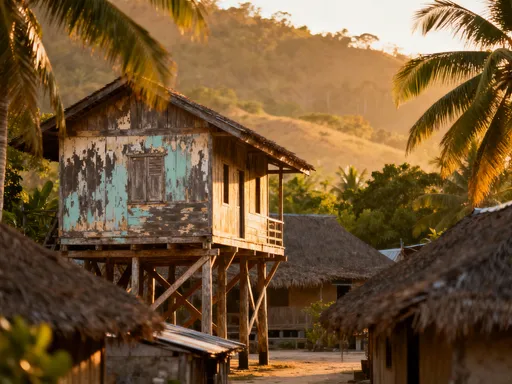
Walking through neighborhoods like Vuda or Saweni reveals even more. Houses are often surrounded by flowering hibiscus and frangipani, their gates adorned with hand-painted signs. Some storefronts feature intricate wood carvings or stained glass inspired by Indo-Fijian design. Even the humblest buildings carry a sense of care and identity. For photographers, these details offer rich opportunities—but with a note of responsibility. Always ask before photographing people or private property. Respect is not just polite; it is essential to ethical travel.
Local Eats: Where Urban Flavor Comes Alive
To understand Nadi is to taste it. The town’s culinary scene is a direct reflection of its multicultural makeup, where Indian-Fijian, Indigenous Fijian, and Pacific Islander flavors blend seamlessly. Unlike resort menus designed for foreign palates, the food here is bold, unapologetic, and deeply rooted in tradition. It is not always fancy, but it is always honest.
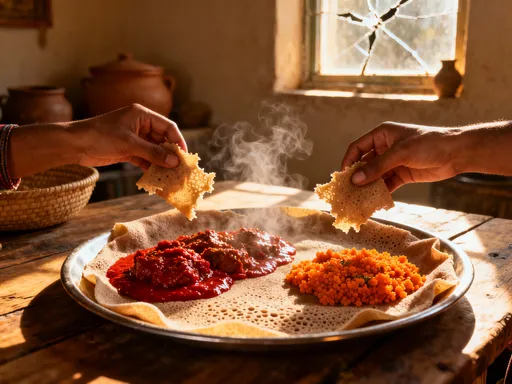
Start with roti. Not the flatbread found in Indian restaurants abroad, but the soft, flaky version served fresh from the griddle at family-run takeaways. Tear off a piece, dip it into a side of dhal or curried pumpkin, and you taste generations of adaptation and resilience. These small eateries, often little more than a counter and a stove, are where Indian-Fijian families have preserved recipes passed down since their ancestors arrived as indentured laborers in the 19th century.
Then there’s the lovo—a traditional earth oven feast. While often reserved for special occasions, some community centers and roadside stalls offer smaller portions to visitors. Imagine tender pork or chicken, wrapped in banana leaves and slow-cooked with root vegetables. The meat falls apart, infused with smoky, earthy flavors. It’s a dish that speaks of patience, community, and celebration.
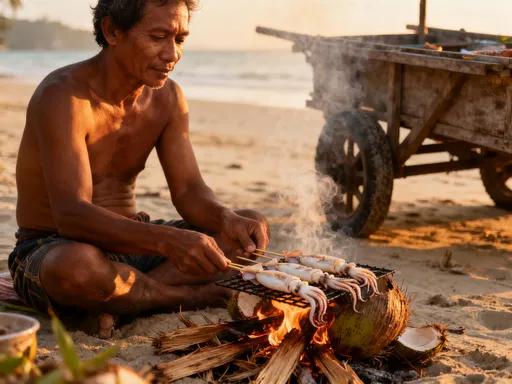
For something quick and refreshing, seek out a roadside coconut vendor. With a few swift machete strikes, they’ll crack open a green coconut, hand it to you with a straw, and move on to the next customer. The water is sweet, cool, and naturally sterile—a perfect companion on a hot afternoon. Other must-try items include cassava pie (a savory-sweet dish with creamy filling), rourou (taro leaves cooked in coconut milk), and fresh sugar cane juice pressed on the spot.
Hygiene standards vary, so use common sense. Choose stalls that are busy—high turnover means fresh food. Look for clean preparation areas and covered ingredients. When in doubt, follow the locals. If a spot is packed with residents, it’s likely safe and delicious. And remember: eating here is not just about sustenance. It’s an act of cultural exchange, a way to say, “I see you, and I respect your way of life.”
Getting Around: Navigating Nadi’s Urban Grid
One of the most rewarding parts of visiting Nadi is moving through it like a local. The town is compact enough to explore on foot, but its layout can be confusing at first. Streets are not always clearly marked, and signs may be in Hindi or Fijian. There is no grid system, no numbered avenues—just a network of roads that seem to bend according to need rather than design. But with a little patience, the logic emerges.
Walking is the best way to absorb the details. From the airport, it’s about a 30-minute stroll to the town center—long, but doable with water and sun protection. Along the way, you’ll pass roadside fruit stands, small temples, and families waving from their porches. Sidewalks are inconsistent, so stay alert to traffic. Stick to quieter side streets when possible, and always cross with care.
For longer distances, public buses are reliable and extremely affordable. Brightly painted minibuses run frequently between Nadi, Lautoka, and surrounding villages. They’re not luxurious—seats are tight, music is loud, and air conditioning is rare—but they offer an authentic experience. Fares are paid in cash, usually under FJD $2 for short trips. Drivers are generally helpful, and fellow passengers often point you in the right direction if you look lost.
Taxis are available at the airport and near hotels, but agree on the fare before starting your journey. A ride to the market or a temple should cost between FJD $10 and $15. For more independence, scooter rentals are an option, though road conditions and traffic can be challenging for inexperienced riders. Helmets are essential, and insurance is strongly advised.
Whatever mode you choose, navigating Nadi is more than practical—it’s transformative. When you move through a place on its own terms, you begin to understand it differently. You notice routines, rhythms, and relationships that tours can’t show. You stop being a spectator and start being a participant.
Why Urban Travel Matters: Shifting from Scenery to Substance
In the age of curated travel content, it’s easy to believe that beauty exists only in postcard-perfect landscapes. We scroll through images of turquoise lagoons and sunset cruises, forgetting that culture lives in kitchens, markets, and streets. Towns like Nadi challenge us to expand our definition of what’s worth seeing. They remind us that authenticity is not always quiet, pristine, or remote—it can be loud, messy, and deeply human.
Resort-based tourism offers comfort and convenience, but it often creates a bubble. Guests enjoy Fijian hospitality, music, and dance—but in a controlled environment, separated from the realities of everyday life. In contrast, urban travel pulls back the curtain. In Nadi, you see how people earn a living, how they worship, how they raise families. You witness the economic challenges and the resilience that comes with them. You hear multiple languages in a single block and see children in school uniforms walking past spice shops.
This kind of travel fosters deeper understanding. It moves beyond admiration to empathy. When you buy roti from a woman who’s been up since 4 a.m., or chat with a bus driver about his family, you’re not just observing culture—you’re engaging with it. You begin to see Fiji not as a paradise for outsiders, but as a nation of people with complex lives, hopes, and histories.
Moreover, urban tourism supports local economies in meaningful ways. Money spent at the market, a family restaurant, or a small guesthouse stays in the community. It helps sustain livelihoods that are often invisible to the mainstream tourism industry. By choosing to explore Nadi, travelers contribute to a more balanced, equitable form of tourism—one that values people as much as scenery.
How to Visit Right: A Mindset for Urban Respect and Discovery
Exploring Nadi requires more than a map—it requires a mindset. This is not a theme park or a cultural exhibit. It is a living town, and visitors are guests. The most important rule is simple: respect. That means dressing modestly when near temples or religious sites, speaking politely, and recognizing that not every moment is meant for a photograph.
Ask before taking pictures of people, especially children. A smile and a gesture can go a long way. If someone declines, accept it gracefully. Support local businesses by buying directly from vendors, not from souvenir shops that import goods. Learn a few words in Fijian or Hindi—“bula” (hello), “vinaka” (thank you)—and use them generously. These small acts signal that you are not just passing through, but that you care about the place and its people.
Slow down. Don’t try to see everything in one day. Sit at a roadside stall and drink coconut water. Talk to the vendor. Watch the world go by. Let the rhythm of the town guide you, not a checklist. Curiosity, when paired with humility, becomes a bridge.
And finally, be open to surprise. You may not find luxury spas or infinity pools, but you will find something rarer: truth. You’ll see how culture adapts, how communities endure, and how joy exists in the everyday. Nadi doesn’t need to perform to be beautiful. Its power lies in its honesty, its resilience, its life.
Nadi isn’t polished or packaged—but that’s exactly why it’s powerful. By stepping beyond the airport and embracing its urban truth, travelers gain something rare: real connection. This town doesn’t perform for visitors; it lives. And in that honesty lies its beauty. The next time you land in Fiji, don’t rush to the coast—spend a day seeing the country through the eyes of its people, in the heart of their town. You might just leave changed.