You Won’t Believe What I Ate in Gondar
Gondar, Ethiopia, is more than ancient castles and mountain views—it’s a flavor adventure waiting to explode in your mouth. I went looking for history but found myself chasing injera through bustling markets and sharing spicy stews with locals who called me family by dessert. The food here isn’t just eaten; it’s lived. From street-side coffee rituals to hidden home kitchens, Gondar’s cuisine rewrote everything I thought I knew about African flavors.
First Impressions: When History Meets Hunger
Stepping into Gondar feels like walking through layers of time. The air carries the scent of roasted barley and woodsmoke, rising from clay ovens tucked between narrow alleyways and cobbled paths. Just beyond the skyline of 17th-century Fasil Ghebbi, a UNESCO World Heritage site, lies a different kind of monument—one made not of stone, but of simmering pots, sizzling grills, and the rhythmic pounding of spices in wooden mortars. I arrived with a guidebook full of historical facts, but it wasn’t the castles that captured me first. It was the hunger.
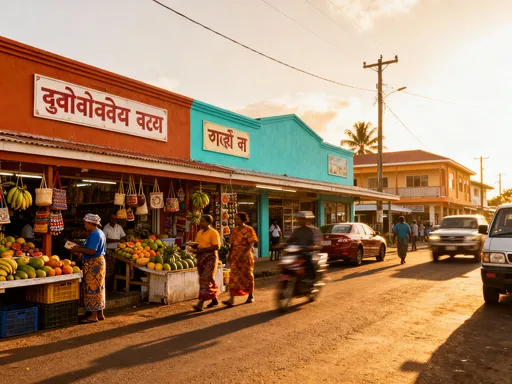
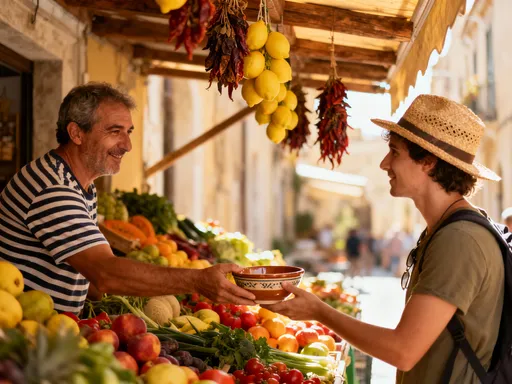
As I wandered from the royal enclosure toward the bustling market near Debre Birhan Selassie Church, my attention shifted from architecture to aroma. The transition was seamless: one moment I was admiring intricate frescoes, the next I was following the tang of fermented teff and chili into a maze of food stalls. Vendors stirred large iron pots, their hands moving with practiced ease, while children balanced stacks of flatbreads on their heads like living market displays. This wasn’t tourism. This was daily life, pulsing with energy, and it smelled incredible.
Hunger, I quickly realized, was not just a bodily need in Gondar—it was a bridge. It transformed me from an observer into a participant. When I pointed at a dish I couldn’t name, the woman cooking it smiled and handed me a piece of injera, urging me to scoop up a bite of stew. No menu, no price tag—just generosity. That moment shifted my entire journey. What began as a cultural tour became a culinary quest, driven not by curiosity alone, but by connection. In Gondar, food doesn’t wait to be discovered. It calls you in.
Injera: More Than a Staple—It’s a Language
If there is one thread that weaves through every meal in Gondar, it is injera. This spongy, sourdough flatbread is more than a side dish—it is the foundation, the plate, the utensil, and the soul of Ethiopian dining. Made from teff, a tiny grain native to the Ethiopian highlands, injera ferments for several days before being poured onto a large circular griddle called a mitad. The result is a wide, pancake-like bread with a slightly tangy taste and a surface full of tiny holes—perfect for soaking up stews and sauces.
I had the privilege of watching an elderly woman named Alemitu prepare injera in her family’s courtyard, where a low brick stove stood beneath a thatched awning. She showed me how the batter is left to ferment in a clay pot, stirred twice daily, and tested by dropping a small amount into warm water—if it floats, it’s ready. The process is slow, patient, and deeply intuitive. There are no timers, no written recipes. Just generations of knowledge passed from mother to daughter.
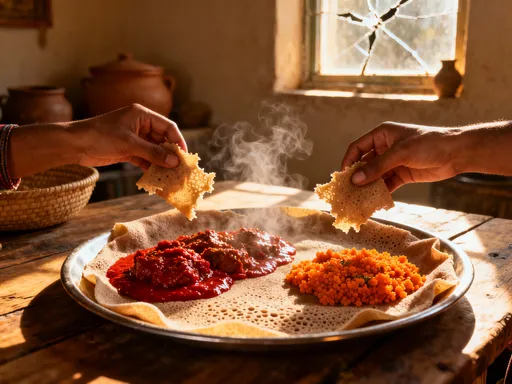
When the injera was cooked, she laid it out on a large platter, then spooned vibrant wats on top, creating a colorful mosaic of red lentils, yellow split peas, and spiced chicken. We sat on low stools around the platter, eating with our right hands—left hands considered inappropriate for eating in many Ethiopian households. At first, I worried about etiquette, about making a mess. But Alemitu laughed and said, “You don’t eat with your hands to be clean. You eat this way to feel.” That moment changed how I understood dining. In Gondar, eating is not a solitary act. It is communal, tactile, and full of meaning. The injera isn’t just food—it’s a language of belonging.
Wats and Stews: The Soul of Gondar’s Kitchens
The heart of any Ethiopian meal beats in its wats—slow-cooked, spice-rich stews that vary by region, season, and family tradition. In Gondar, where the highland climate supports a rich agricultural cycle, these dishes are especially robust and deeply flavorful. I spent an afternoon at a local lunch spot run by three generations of women, where pots bubbled over open flames and the air was thick with the scent of garlic, ginger, and berbere—a complex spice blend that defines Ethiopian cuisine.
Berbere is the cornerstone of most wats. A mixture of chili peppers, fenugreek, coriander, paprika, cloves, and several other spices, it is roasted and ground by hand in many homes. The version I tasted in Gondar had a smoky depth, with a heat that built gradually rather than assaulting the palate. It was used in doro wat, a national favorite made with chicken, hard-boiled eggs, and a deep red sauce that clings to every bite of meat. Misir wat, a lentil-based stew, offered a slightly sweeter profile, while shiro—a powdered chickpea stew—was earthy and comforting, perfect for cooler evenings.
What struck me most was how each dish carried a story. The woman stirring the doro wat told me it was her grandmother’s recipe, passed down through decades of fasting and feasting. “We eat this on Easter,” she said, “but also when someone returns home. It’s a dish of celebration and welcome.” I noticed how the stews were arranged on the injera in distinct sections, not mixed together—a visual representation of balance and harmony. Sharing a platter meant sharing not just food, but history, identity, and care.
The experience taught me that Ethiopian cooking is not about speed or convenience. It’s about patience, presence, and purpose. Every ingredient has a role, every step a meaning. To eat a wat in Gondar is to taste resilience, faith, and the quiet pride of a culture that has preserved its traditions through centuries of change.
Coffee Ceremonies: Where Time Stops and Taste Awakens
No journey through Gondar’s cuisine is complete without the coffee ceremony—a ritual so central to daily life that it transcends mere refreshment. One morning, I was invited into a modest home where a woman named Tiruwa prepared coffee with the precision of a sacred rite. She began by washing green coffee beans in a shallow bowl, then roasting them in a long-handled pan over charcoal. The aroma filled the room, rich and nutty, as the beans cracked and darkened.
She invited me to sit on a low stool near the brazier, where incense began to curl through the air. As the roasted beans cooled, she ground them by hand using a wooden mortar and pestle. Then came the jebena, a traditional clay coffee pot with a round belly and a long spout. She added water and grounds, letting the mixture simmer slowly. The first round, called Abol, was the strongest and most honored. The second, Tona, was milder. The third, Baraka, meaning “blessing,” was said to carry spiritual significance—those who drank it were believed to receive good fortune.
Each cup was served in a small handleless glass, accompanied by a piece of roasted barley or popcorn. We sipped slowly, talking about family, weather, and the price of teff at the market. Time, which often feels so urgent in modern life, seemed to pause. This was not a caffeine fix. It was a moment of connection, a pause in the day dedicated to presence and conversation.
The coffee ceremony is more than tradition—it’s a social anchor. It happens in homes, in courtyards, in market breaks. It’s offered to guests, neighbors, and even strangers. In a world that often values speed over substance, Gondar’s coffee ritual is a quiet rebellion. It says: sit. Breathe. Listen. Share. And in that sharing, find nourishment not just for the body, but for the soul.
Street Eats and Hidden Bites: Beyond the Tourist Trail
As the sun dipped behind the hills of Gondar, a different kind of energy emerged. The day’s heat softened, and the streets came alive with the sizzle of grills and the laughter of families gathering for evening meals. I followed the glow of lanterns to a night market tucked behind the main square, where vendors set up makeshift stalls under corrugated metal roofs. This was where locals came to eat—not for show, but for satisfaction.
I sampled roasted corn, charred to perfection and brushed with a spicy butter that clung to every kernel. A man handed me a small plate of kitfo, a dish made from finely minced raw beef seasoned with mitmita (a spicy chili powder) and niter kibbeh (spiced clarified butter). It was served with a side of ayib, a mild cottage cheese, to balance the heat. Though I hesitated at first—raw meat in a tropical climate—I noticed that the stall was packed with young people, laughing and eating with confidence. That was my cue: when in doubt, follow the locals.
Another favorite was tej, a honey wine with a golden hue and a slightly floral tang. Brewed in homes and small taverns, it’s often served in recycled glass bottles or hand-carved wooden mugs. I sat on a plastic stool, sipping tej while listening to a group of musicians playing traditional string instruments. The music wasn’t for tourists. It was for them, for now, for joy.
For travelers, eating street food in a new place can be intimidating. But in Gondar, I learned a few simple rules: choose stalls with high turnover, watch where locals line up, and avoid anything sitting in the sun for hours. Drink bottled water, and don’t rush. Let your stomach adjust. Bold eating doesn’t mean reckless eating. It means trusting your instincts, respecting the culture, and staying mindful. When done right, street food isn’t just safe—it’s unforgettable.
Home Dining: The Real Taste of Gondar
Perhaps the most profound meal I experienced in Gondar wasn’t in a restaurant or market. It was in the home of a family who invited me in after seeing me sketching in their neighborhood. They didn’t speak much English, and my Amharic was limited to “hello” and “thank you,” but food became our common language. Their dining space was simple—a woven mat on the floor, a low table, and a shared platter of injera piled high with colorful stews.
Everything was prepared from scratch. The teff was grown by a relative in the countryside. The spices were hand-ground. The coffee was roasted on the spot. As we ate, they pointed to each dish, naming it slowly so I could repeat it. I fumbled, they laughed, and soon we were all mimicking each other’s accents. A child offered me a piece of chicken with her hand, her eyes bright with pride. No cutlery, no formality—just warmth.
In Ethiopian culture, no one eats alone. Meals are shared, often with extended family or neighbors. To be invited into a home is a sign of deep respect. It means you are not a visitor. You are, for that moment, part of the family. I learned that hospitality here is not performative. It is woven into the fabric of daily life. Refusing food is almost unthinkable. Offering it is an act of dignity and love.
That night, as I walked back under a sky full of stars, I realized that the taste of Gondar wasn’t just in the berbere or the injera. It was in the laughter, the shared silence, the way a grandmother patted my hand when I tried to help clear the table. To eat in a Gondar home is to understand that food is not just sustenance. It is memory, identity, and belonging—all served on a single platter.
Bringing Gondar Home: Flavors That Stay With You
Back in my kitchen thousands of miles away, I tried to recreate injera. I bought teff flour online, followed a recipe to the letter, and waited for the fermentation. But the result was flat, too dense, lacking that signature sour tang. I tried again with a clay pot, then with a cloth cover, then with a warmer corner of the house. Nothing worked. I finally accepted that some things cannot be replicated—only remembered.
Yet, the flavors of Gondar stayed with me in other ways. I began making spiced butter like niter kibbeh, infusing it with garlic, fenugreek, and cardamom. I sought out Ethiopian markets in my city, learning to identify good berbere by smell and color. I hosted small gatherings, laying out injera on a large plate and inviting friends to eat with their hands. It wasn’t the same, but it was a tribute—a way to keep the spirit alive.
What surprised me most was how the food memories outlasted the visual ones. I can’t recall every castle tower I saw, but I can still taste the warmth of that first bite of doro wat, the crunch of roasted barley during the coffee ceremony, the sweetness of tej under the stars. Food, it turns out, is one of the most powerful forms of memory. It engages all the senses. It connects us to people, places, and moments in a way that photos never can.
Travel changes you. It opens your eyes, broadens your mind, and fills your camera roll. But food changes how you remember. It turns a trip into a transformation. In Gondar, I didn’t just eat. I listened, I learned, I belonged. And though I left with an empty suitcase, I carried something far more valuable—flavors stitched into my senses, stories woven into my soul.
Gondar’s cuisine is not a side note—it’s the heartbeat of the city. Every bite carries centuries of tradition, community, and pride. To taste Gondar is to understand it, not just see it. And once you’ve eaten here, you don’t just leave—you carry the flavors with you, like souvenirs stitched into your senses.