You Won’t Believe What I Ate in Strasbourg — This Changed Everything
Strasbourg isn’t just half-timbered charm and winding canals — it’s a flavor bomb waiting to explode. I went for the postcard views but stayed for the food. From buttery choucroute that melted my reservations to a tarte flambée so good I nearly cried — this city rewired my taste buds. It’s where French elegance meets Alsatian heart, and every bite tells a story. Let me take you through the meals that made me fall head over heels. This is not just a culinary journey; it’s a sensory education in tradition, warmth, and the quiet pride of a region that knows exactly who it is. And for anyone who has ever believed that travel is best measured in moments, not miles, Strasbourg offers a new metric: the number of times your soul says, "Yes, this. This is what I came for."
First Bite, Lasting Impression
Stepping off the train at Strasbourg’s Gare Centrale, the city greeted me with a symphony of quiet elegance. Cobblestone streets glistened under a soft morning drizzle, and the distant spire of the Cathédrale Notre-Dame pierced the pale sky like a needle threading clouds. But it wasn’t the architecture that first captured me — it was the scent. Warm, yeasty, and faintly sweet, the aroma of freshly baked bread curled through the air, leading me like a trail of breadcrumbs to a corner bakery where a woman in a flour-dusted apron slid a golden kouglof from its mold. That first day, I followed my nose, and it never steered me wrong.
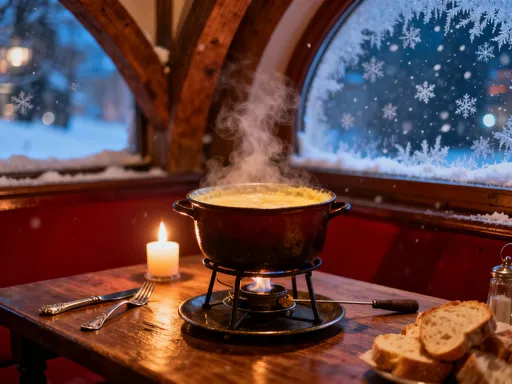
My first real meal came in the dim, timbered warmth of a family-run winstub near the Petite France district. These traditional Alsatian taverns are not restaurants in the modern sense; they are living rooms with menus, where the wine flows freely and the food arrives in hearty portions, meant to be shared. I started with a basket of warm pretzels, their crusts crackling under buttery fingers, served with a ramekin of creamy mustard that tingled with just the right amount of heat. A glass of local Sylvaner, crisp and floral, accompanied the first bite — and in that moment, I realized this was not just dinner. This was heritage, patience, and pride served on earthenware plates.
Alsatian cuisine stands apart in France, not because it tries to be different, but because it cannot help but be itself. Nestled between the Vosges Mountains and the Rhine River, Alsace has long sat at the crossroads of cultures. French refinement dances with Germanic comfort, creating a culinary identity that is both rich and rooted. What sets it apart is its devotion to seasonality and locality. Ingredients are not chosen for trendiness but for tradition — potatoes from nearby fields, pork from heritage breeds, cabbage fermented slowly in wooden barrels. There’s no pretense, only presence. Every dish feels like a conversation with the land and the generations who worked it.
The Soul of Alsatian Dining: Winstubs and Warmth
To understand Strasbourg’s food culture, one must first understand the winstub. These historic taverns are the heartbeat of Alsatian social life, where neighbors gather after work, families celebrate milestones, and travelers are welcomed like long-lost cousins. The word itself comes from the Alsatian dialect — "winstuewel" meaning "wine room" — and that’s exactly what they are: intimate spaces where wine takes center stage, but never at the expense of food or fellowship. The walls are lined with dark wood, the floors creak underfoot, and the air hums with the low murmur of conversation and the clink of glasses.
The menu in a true winstub reads like a love letter to the region. Choucroute garnie, perhaps the most iconic dish, is more than sauerkraut with sausages — it is a celebration of preservation, patience, and pork in all its forms. In my favorite, the choucroute arrived steaming in a copper pot, layered with juniper-scented sauerkraut, Morteau sausage, Strasbourg sausage, smoked bacon, and a tender pork knuckle. Each component had been slow-cooked in white wine, allowing the flavors to meld into something deeply savory and slightly tangy. It was hearty without being heavy, complex without being fussy. This is food that knows its purpose: to nourish, to comfort, to bring people together.
Then there is baeckeoffe, a casserole so beloved it has its own name meaning "baker’s oven" in Alsatian. Traditionally prepared on Mondays — wash day, when women would bring their stew to the village baker to cook in the residual heat of the ovens — it combines layers of marinated beef, pork, and lamb with potatoes, onions, and Alsace wine. The result is a dish of profound depth, where the meat falls apart at the touch of a fork and the broth carries the warmth of cloves and thyme. Equally distinctive is fleischschnacka, a spiral-shaped pasta dish made with minced meat and sauerkraut, often baked until golden. These are not flashy dishes, but they carry the weight of history and the quiet confidence of a culture that values substance over spectacle.
What makes dining in a winstub truly special, however, is not just the food — it’s the way it’s shared. Meals unfold slowly, over hours. Strangers exchange nods, children are welcomed at tables, and the waitstaff remembers your wine preference by the second visit. This is not service; it is hospitality. And in a world where dining has become transactional, the winstub feels like a sanctuary of sincerity. Here, food is not a performance — it is a practice of belonging.
Market Magic at Place du Marché Gayot
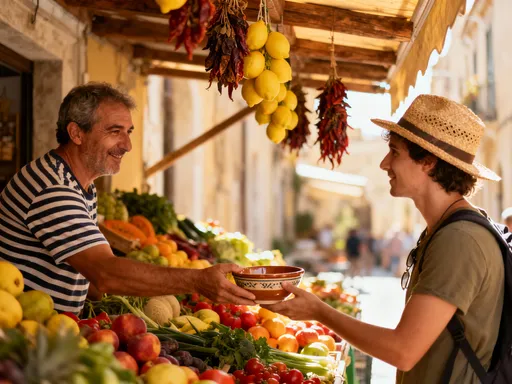
If the winstub is the soul of Alsatian dining, the market is its pulse. One crisp Saturday morning, I made my way to Place du Marché Gayot, a lesser-known but deeply authentic market tucked behind the bustling Place Kléber. Unlike the tourist-heavy stalls near the cathedral, this market felt lived-in — a place where Strasbourgeois come to shop, chat, and savor the rhythm of weekly ritual. Under rows of striped awnings, vendors displayed pyramids of pink-fleshed radishes, baskets of wild morels, and wheels of cheese so pungent they announced themselves before I turned the corner.
I paused at a dairy stand where a woman in a blue smock handed me a sliver of Munster, the region’s most famous cheese. Washed in brine and aged until its rind bloomed a deep orange, it had a scent that bordered on daring — earthy, barnyard-rich, and undeniably alive. But the flavor? Smooth, buttery, with a lingering warmth that built slowly on the tongue. "It needs boiled potatoes and caraway," she told me with a wink, "and a glass of Gewürztraminer to keep it in check." I followed her advice later that day, and it was a revelation — the cheese tamed by the wine’s floral sweetness, the potatoes grounding its intensity.
What struck me most was the pride behind every product. At a charcuterie stall, a man in a blood-stained apron carved slices of jambon gris, a dry-cured ham aged for months in the cool mountain air. "No additives," he said, "just salt, time, and the wind from the Vosges." Nearby, a woman sold jars of homemade chutney — quince with ginger, mirabelle plums with cinnamon — each label hand-written with the date and batch number. These were not commodities; they were heirlooms, crafted with care and passed down through seasons.
The market reminded me that great food begins long before it reaches the plate. It begins in the soil, in the hands of those who tend it, and in the decisions to honor rather than rush. When you eat in Strasbourg, you are not just consuming ingredients — you are participating in a cycle of care. And when those ingredients are this fresh, even the simplest meal becomes extraordinary. A salad of young lettuce, dressed with walnut oil and topped with shavings of aged Comté, tasted like sunlight and dew. There was no need for embellishment — only respect for what the land had provided.
Tarte Flambée: Simplicity That Shines
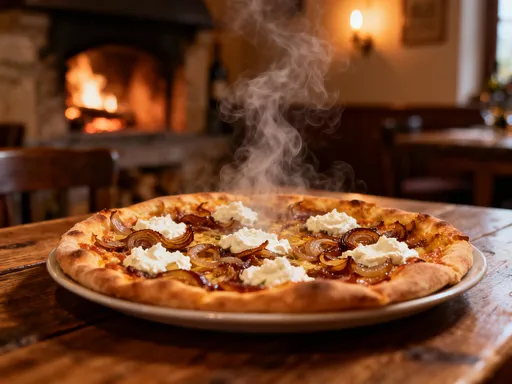
No dish encapsulates Alsatian cuisine quite like the tarte flambée. At first glance, it seems almost too simple — a paper-thin crust, smeared with crème fraîche, scattered with onions, and dotted with bacon. But in its minimalism lies its magic. Baked in a wood-fired oven until the edges blister and char, it emerges with a smoky aroma and a texture that crackles between crisp and chewy. It is food stripped to its essence, yet somehow more complete for it.
Determined to find the best version, I embarked on a personal pilgrimage across three distinct venues. First, at a centuries-old winstub in the heart of Petite France, I watched through a glass partition as a baker stretched the dough by hand, a gesture so practiced it looked like second nature. The tarte arrived on a wooden board, still steaming, the onions translucent and sweet, the lardons crisp without being greasy. Paired with a half-liter of Riesling, it was perfection — rustic, honest, and deeply satisfying.
Next, I visited a modern bistro near the contemporary arts district, where the chef had reimagined the classic with a twist: smoked trout instead of bacon, chives instead of onions, and a drizzle of dill oil. It was lighter, more delicate, and undeniably elegant. While purists might balk, I found it a worthy evolution — proof that tradition can breathe without breaking. The final stop was a pop-up stand by the Ill River, where a young couple served tarte flambée from a converted van. Their version stuck to the classic formula, but the dough was even thinner, almost translucent in the center, and the wood oven gave it a deeper char. Eaten on a bench with the canal shimmering beside me, it felt like the most authentic version of all — not because it was the best, but because it was shared in joy.
What makes the tarte flambée so special is not just its flavor, but what it represents. It is a communal dish, often ordered for the table, meant to be torn and passed around. It requires no cutlery, no ceremony — just hands and hunger. In a region where food is deeply tied to togetherness, the tarte flambée is a symbol of simplicity, generosity, and the belief that the best things in life are often the least complicated. It is not a dish that impresses — it is one that connects.
Fine Dining with a Local Heart: A Night at a Michelin-Recommended Table
For all its rustic charm, Strasbourg also embraces refinement — but never at the cost of authenticity. One evening, I dined at a Michelin-recommended restaurant tucked into a 16th-century townhouse near the university. The exterior was unassuming, but inside, the space balanced elegance with warmth: low lighting, linen napkins, and a curated selection of Alsatian art on the walls. The chef, a native of Colmar, had trained in Paris but returned to Alsace to reinterpret the cuisine of his childhood with precision and respect.
The tasting menu was a journey through the seasons. It began with a delicate foie gras terrine, served with a compote of figs poached in red wine and a shard of toasted brioche. The richness of the liver was balanced by the fruit’s tartness, a harmony that spoke of careful pairing. Next came a venison loin, seared to a perfect medium-rare and glazed with a juniper and red wine reduction. Served with roasted salsify and black trumpet mushrooms, it tasted of the forest in autumn — deep, earthy, and alive. Each dish was plated with artistry, but never overshadowed by it. The flavors remained the focus, clean and pronounced, letting the ingredients speak for themselves.
The wine pairings elevated the experience further. A glass of Pinot Noir from a small vineyard in the foothills of the Vosges complemented the venison with its bright acidity and notes of cherry. Later, a late-harvest Gewürztraminer cut through the sweetness of a honey and almond tart with its lychee-like perfume and balancing acidity. What impressed me most was the sommelier’s knowledge — not just of vintages, but of stories. He spoke of the family who had farmed the same plot for four generations, of the challenges of organic viticulture in a changing climate, of the joy of seeing young winemakers return to the region. Wine here was not just a beverage; it was a narrative.
This meal proved that Alsatian cuisine can be both elevated and true to itself. Innovation did not mean reinvention — it meant refinement. The chef used modern techniques, but his inspiration remained rooted in the land, the seasons, and the traditions of his ancestors. He foamed nothing, deconstructed nothing. Instead, he honored what was already whole. And in doing so, he reminded me that the highest form of culinary artistry is not novelty, but reverence.
Sweet Endings: From Kouglof to Mirabelle Tarts
In Alsace, dessert is not an afterthought — it is a daily ritual. Whether it’s a slice of kouglof with morning coffee, a jam-filled tart during the afternoon pause, or a towering charlotte for Sunday dinner, pastry is woven into the rhythm of life. I began my exploration at a beloved bakery near the cathedral, where the scent of vanilla and yeast hung in the air like a promise. Behind the glass, rows of kouglof rose in their distinctive crown-shaped molds, their golden crusts glistening with pearl sugar. The baker, a woman with flour in her hair and a smile that needed no translation, handed me a warm slice. The crumb was tender, the almonds fragrant, and the rum glaze just sweet enough to make me close my eyes.
Later, I sought out tarte aux mirabelles, a seasonal favorite made with the small, golden plums that thrive in Alsace’s sun-drenched valleys. At a family-run patisserie in the Neustadt district, I watched as a young apprentice arranged the fruit in concentric circles, each plum halved and fanned like petals. Baked in a buttery shortcrust, the tart emerged with a glossy finish and a scent that was both floral and tart. One bite delivered bursts of jammy sweetness, balanced by the crust’s delicate crunch. It was summer captured in pastry — fleeting, precious, and deeply satisfying.
What struck me about Alsatian desserts was their honesty. There were no towering soufflés or intricate sugar sculptures — just well-made, ingredient-driven sweets that celebrated what the region grows. Quark-based cakes, apple strudels with layers thinner than parchment, cinnamon-laced brioche twists — each felt like an extension of home cooking, elevated by care rather than complexity. And in a culture that values balance, desserts were never cloying. They were meant to comfort, not overwhelm — to end a meal with a quiet sigh, not a sugar rush.
Dessert, like all Alsatian food, is an act of continuity. Recipes are passed from grandmother to granddaughter, written in notebooks with coffee stains and flour smudges. To eat a kouglof in Strasbourg is to taste decades of Sunday mornings, of laughter around tables, of hands shaping dough with love. It is not just food — it is memory made edible.
Beyond the Plate: How Food Shapes the Strasbourg Experience
By the end of my stay, I realized that Strasbourg had changed me — not just as a traveler, but as a person who eats. This city taught me that food is not a sideshow to culture; it is culture. To dine here is to understand the region’s history, its values, its geography. The Germanic influence in the hearty stews, the French elegance in the plating, the seasonal awareness in the markets — all of it tells a story of resilience, adaptation, and pride. And for a woman in her thirties, juggling family, home, and the quiet search for meaning, that story felt deeply personal.
Food in Strasbourg is an invitation — to slow down, to savor, to connect. It taught me to appreciate the rhythm of a long meal, the joy of sharing bread, the comfort of a familiar dish on a foreign street. It reminded me that nourishment is not just physical — it is emotional, social, spiritual. When I sat in a winstub with a glass of wine and a plate of choucroute, I wasn’t just eating. I was being welcomed. And in a world that often feels hurried and hollow, that sense of belonging was a gift.
For those planning a visit, a few practical notes: meals are typically served later than in some countries — lunch from 12:00 to 2:00 p.m., dinner from 7:30 onward. Menus often include both French and German names for dishes, reflecting the region’s bilingual heritage. When in doubt, ask the server for recommendations — they are usually proud to guide you. And don’t be shy about wine; Alsace produces some of France’s most distinctive whites, and it is customary to enjoy a glass with your meal. A simple "Je voudrais un verre de Riesling, s’il vous plaît" will open more doors than you expect.
As I boarded the train to leave, I carried more than souvenirs. I carried the taste of wood-fired tarte flambée, the scent of Munster on a market morning, the warmth of a baker’s smile. Strasbourg did not just feed me — it reminded me that the best journeys are tasted, not just seen. And sometimes, all it takes is one bite to change everything.